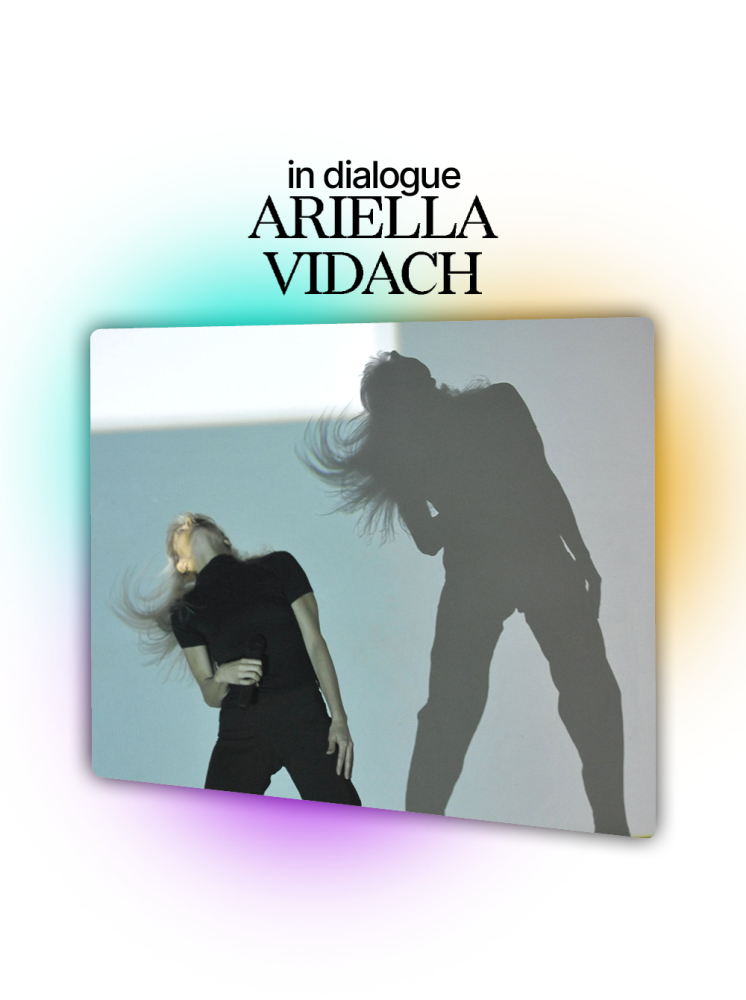
In Dialogue with Ariella Vidach
During her two-month EMAP residency at the MEET Digital Culture Centre, choreographer and dancer
Ariella Vidach developed a new phase of KOPPELIA_giardino13, a performance project created in
collaboration with Claudio Prati, the project’s co-author and co-director. The collaboration between
Vidach and Prati is an integral part of the research: whilst Vidach works on the body, movement and
choreographic construction, Prati develops the visual and cross-media component of the project, from
the creation of video footage and set design to direction and the integration of technology within the
performance.
KOPPELIA_giardino13 thus emerges from the convergence of choreographic practices, visual research
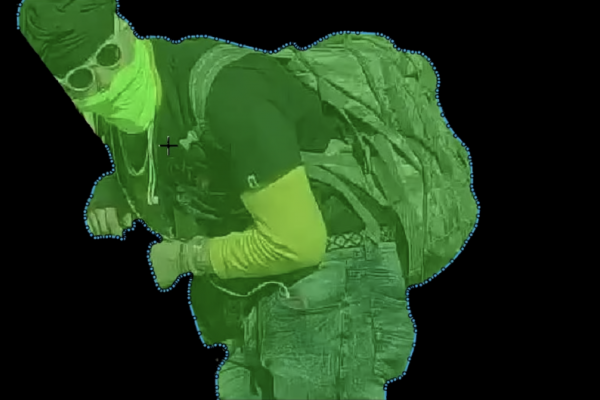
and technological experimentation. Through motion capture, digital avatars and robotics, the project
explores what happens when movement is translated into data and becomes transferable beyond the
body that generated it. During the residency, Vidach and Prati also worked on creating a digital library of
movement and exploring different forms of presence, from the performer and their digital clone to the
robotic body, questioning the transformations of choreography in the transition between physical and
digital environments. These are the very themes that emerge in the interview, ranging from motion
capture understood as a ‘library of movement’ to the construction of digital clones.
This collaborative research took place within a unique cultural context: MEET, a space where artistic
experimentation, technology and contemporary culture intertwine. The residency offered not only
access to technologies, spaces and technical expertise, but also opportunities for encounter and
dialogue that helped steer the project in new directions, including immersive dimensions and Mixed
Reality.
In this conversation with Maria Grazia Mattei, Ariella Vidach, holder of the EMAP residency, looks back
on the research carried out together with Claudio Prati and reflects on the transformation of movement
into data, on the relationship between human, digital and robotic bodies, and on the new performative
and immersive possibilities opened up by KOPPELIA_giardino13.
Maria Grazia Mattei:
KOPPELIA_giardino13 stems from long-term research into the body and its relationship with digital
technologies. What questions did you bring with you to the EMAP residency at MEET, and what did you
want to explore in this new phase of the project?
Ariella Vidach:
The central question was, once again, the body, but a body that we no longer wished to consider solely
in its physical dimension. For many years we have been working on the possibility of translating
movement into data and using this data to generate new forms of presence. With KOPPELIA_giardino13
we sought to take this research a step further: not merely capturing movement, but establishing
connections between the body, choreography, the face, avatars, robotics and the digital environment.
During the residency, the opportunity to work with motion capture technologies was certainly
important, but the value of the experience at MEET went beyond access to the tools. We were able to
develop and test our research in a context where different skills, artists, researchers, exhibitions,
encounters and perspectives coexist, and where technology is continually situated in relation to art,
culture and social transformations. In this sense, MEET became part of the research process:
technology did not simply act as a tool to realise a pre-defined idea, but became part of the process
itself, helping to raise new questions and gradually reshape the project.
Maria Grazia Mattei:
During the residency, MEET presented Rebecca Allen’s Synthetic Creatures, a body of research spanning
fifty years of the relationship between the body, digital animation, movement, avatars and virtual reality.
How did what was happening around you engage in dialogue with the research you were developing for
KOPPELIA_giardino13?
Ariella Vidach:
Seeing Synthetic Creatures whilst we were working on the body and its digital translation created a sort
of temporal short-circuit. Rebecca Allen has been working for decades on issues that remain extremely
relevant to us today: where does the body sit when it enters a virtual environment? What happens when
a gesture is transformed into an image or a digital entity?
It wasn’t merely a thematic coincidence. The exhibition brought to light a genealogy of research into the
digital body and allowed us to view our own work from a broader perspective. At the same time, Culture
Dome, with its New Atlas of Digital Art, introduced another dimension that was very close to our hearts:
that of immersiveness, not simply as a technological effect, but as a space for experience and research.
This was one of the most interesting aspects of the residency at MEET: being able to develop the
project within a context where exhibitions, meetings, artistic practices and diverse areas of
expertise coexist and can interact. For an artist, these exchanges become part of the process: a line
of inquiry can change because you meet someone, hear a different point of view or engage with a work
that challenges some of your own questions.
Technology, in this sense, is necessary but not sufficient. It is the relationship between
technologies, languages and people that creates the conditions for a research project to open up
to directions that were not necessarily foreseen at the outset.
Maria Grazia Mattei:
Motion capture was one of the key tools in the research carried out during the residency at MEET. How
has working with these technologies changed the way you think about movement and choreographic
construction?
Ariella Vidach:
The key point is that motion capture gradually ceased to be merely a recording tool for us. We worked
with systems such as Qualisys and Captury Live, experimenting with tracking, data continuity and the
possibility of using movement within the performative structure. At a certain point, however, the
question shifted: no longer simply how to capture movement, but what happens to movement
once it has been transformed into data, and what we can construct from that data.
This also changes the way we think about choreography. A gesture is no longer necessarily tied to
the body that produced it: it can be recorded, modified, transferred, archived, recombined and
brought to life through another body.
It was from this point during the residency that we began to think of motion capture as a sort of
library of movement: not a documentary archive of dance, but an opportunity to bring together
available material for new compositions. The data thus becomes choreographic material, something
that can be reworked and transformed to generate new possibilities for movement and new forms of
presence.
Maria Grazia Mattei:
This brings us to the question of the digital clone. What remains of the body when it is transformed into
data, and what, on the other hand, is lost? What relationship is created between the dancer’s body and
their digital presence?
Ariella Vidach:
Motion capture never reproduces the body in its entirety: it isolates certain elements and makes them
transferable. But it is precisely this loss that opens up new possibilities. Data is not the body; it is a
translation of it and, like any translation, it alters what it translates.
This is why we are not interested in the digital clone as a perfect copy of the dancer. Rather, we are
interested in understanding what happens when a movement originating from a human body is
separated from the body that generated it and can be transferred, transformed and brought to life
through another body.
The sequences of the four dancers recorded during the residency thus become digital material that
can be reworked and used to construct the clones’ movements. It is therefore not simply a matter of
preserving a record of the performance, but of creating a repertoire of possibilities for new
compositions and future performances.
Maria Grazia Mattei:
Unitree GO2, the robotic dog, also appears in KOPPELIA_giardino13. What does this presence bring to
the relationship between the human body and the artificial body?
Ariella Vidach:
It introduces a different possibility from the simple imitation of humans. The robot does not
necessarily have to become an anthropomorphic figure or a copy of a living being. Rather, Unitree GO2
opens up a space for engagement with an ‘other’ presence, with an intelligence and a mode of
movement that do not coincide with our own.
This also shifts the question: it is no longer merely a matter of understanding how much a machine
can resemble us, but what happens when an artificial system can perceive, interpret and act in
different ways. The robot therefore enters the project not as a spectacle, but as a presence that alters
the relationship between bodies.
In KOPPELIA_giardino13, we are particularly interested in this intermediate zone: neither a progressive
humanisation of the machine, nor a mechanisation of the human being, but a space in which the
human and the artificial enter into a relationship without the boundary between the two necessarily
having to be resolved. For us, making this boundary visible and perceptible means questioning the
new forms of relationship and coexistence that are emerging between bodies, technologies and
artificial systems.
Maria Grazia Mattei:
During the residency, alongside technological experimentation, a discussion also arose regarding the
content and cultural implications of the project. How important is it, at a stage where research is still
ongoing, to be able to test not only the technical solutions, but also the questions that these
technologies raise?
Ariella Vidach:
It is very important, especially when the research is still ongoing. In an experimental phase, it is not
enough simply to check whether a technical solution works: it is equally important to ask what that
solution is bringing to light, what kind of experience it produces, and what relationships it builds with
the audience.
During the residency, this dialogue gradually led us to shift some questions from a strictly technical
level to an artistic and cultural one. Not just: ‘How can we do this?’, but also: ‘Why are we using this
technology?’, ‘What does it change in the way we perceive the body?’, ‘What sort of relationship
does it create?’
In this sense, technological experimentation has also become a way of exploring broader issues
relating to the body, presence and the relationship between the human and the artificial.
Maria Grazia Mattei:
The residency had its first public presentation at NEXTONES and opened up the project to possible
developments in different contexts. Looking back on these two months of research, what is the most
important outcome of the residency and how has it changed the way you envisage the future of
KOPPELIA_giardino13?
Ariella Vidach:
The most important outcome is not a single device or a single scene, but the fact that we have built an
open system. We started with research into movement and ended up linking motion capture,
choreography, facial recognition, avatars, video, robotics, music and space.
The presentation at NEXTONES on 17 July was significant because it allowed us to test this research
outside the laboratory, in a landscape and a non-theatrical setting. It was an initial opportunity to
assess how the various elements of the project could interact in a real-world context.
The residency did not, therefore, result in a definitive form of KOPPELIA_giardino13, but it laid the
groundwork for the project to continue evolving and taking on different forms: from site-specific
installations to theatre and festivals, right through to immersive environments, Virtual Reality and
Mixed Reality. This is perhaps the most important outcome: to conceive of technology not as
something that defines and locks in the form of the work, but as a driving force that allows it to
continue evolving.
Maria Grazia Mattei:
Looking to the future, what do you take away from this residency experience, and which questions
raised by KOPPELIA_giardino13 do you feel will continue to shape your research?
Ariella Vidach:
Above all, I take away the realisation that research needs cultural contexts. A good idea is not
enough, nor is good technology: we need places where ideas can meet different skills, people,
disciplines and perspectives.
For KOPPELIA_giardino13, this has meant gradually transforming an exploration of the body into an
exploration of the relationship between bodies and forms of presence: the human body, the digital
clone, the robot, space and the audience. In this sense, technology not only opens up new
possibilities, but also raises new questions about the way we conceive of the body, identity, presence
and the relationship between the human and the non-human.
Perhaps this is what we are keen to continue exploring: not using technology simply to represent the
future, but creating, through the project, a space in which to examine the transformations we are
experiencing and ask ourselves what kind of future we wish to inhabit.